↖ All Publications

MICCAI 2025

BetaMixer

Feature Mixing Approach for Detecting Intraoperative Adverse Events in Laparoscopic Roux-en-Y Gastric Bypass Surgery

R. Bose, C.I. Nwoye, J.F. Lazo, J.L. Lavanchy, N. Padoy

ICube, University of Strasbourg, CNRS, France · IHU Strasbourg, France

A feature mixing approach using beta-distributed attention for detecting adverse events during bariatric surgery from multi-scale temporal video features.

Abstract

Detecting adverse events during surgery is critical for patient safety and quality assessment. We present BetaMixer, a feature mixing approach for detecting intraoperative adverse events in laparoscopic Roux-en-Y gastric bypass (RYGB) surgery videos. The method introduces a beta-distribution-based feature mixing module that combines multi-scale temporal features from surgical video to capture both local and global temporal patterns associated with adverse events. Evaluated on a large-scale RYGB dataset, BetaMixer achieves state-of-the-art performance in detecting bleeding, tissue damage, and other intraoperative complications.

Demo

Demo
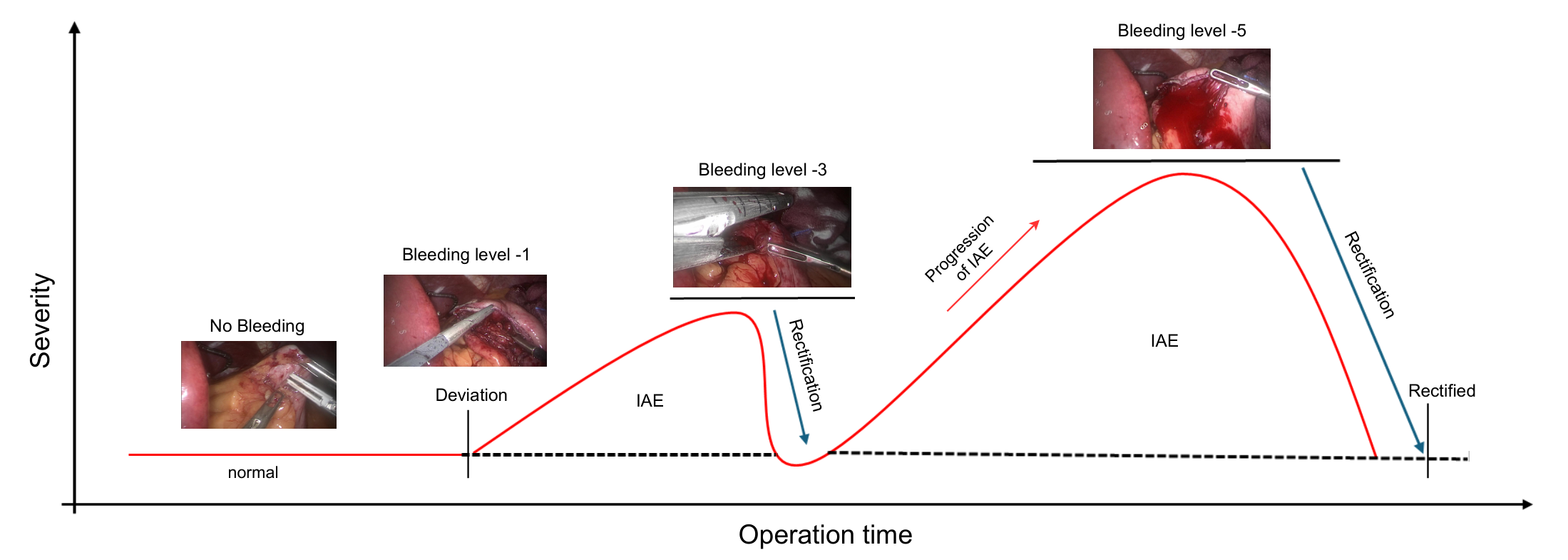
Detecting intraoperative adverse events (bleeding, tissue damage) in bariatric surgery videos using multi-scale temporal feature mixing.

Method

Method
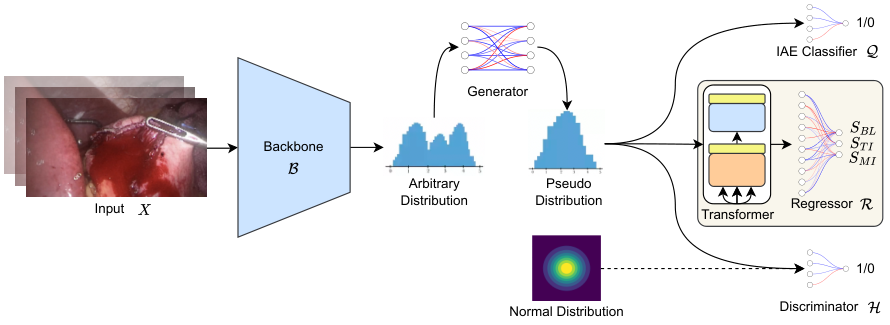
The BetaMixer architecture: multi-scale temporal features are extracted from surgical video and combined through a beta-distribution-based mixing module for adverse event detection.
  • Beta-distributed mixing: A novel feature mixing strategy using beta distributions to weight and combine multi-scale temporal features
  • Multi-scale temporal modeling: Captures both short-term (frame-level) and long-term (procedure-level) patterns associated with adverse events
  • End-to-end training: Jointly optimizes feature extraction and adverse event classification

Research Coverage

Research Coverage
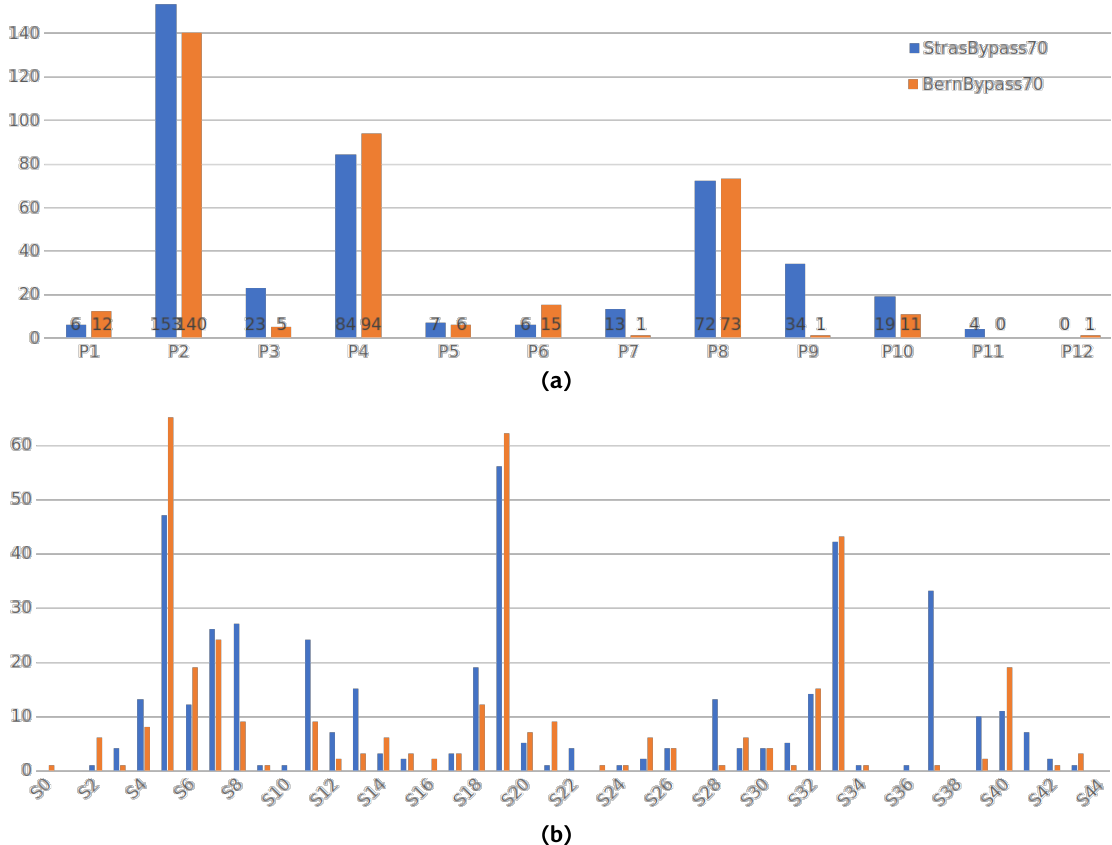
Analysis of feature correlations across temporal scales, showing the complementary information captured by multi-scale mixing.
  • Dataset: Large-scale RYGB surgery video dataset with frame-level adverse event annotations
  • Scope: First dedicated method for adverse event detection in bariatric surgery
  • Analysis: Per-event-type evaluation, temporal resolution ablation, feature mixing strategy comparison
  • Domain: Patient safety, surgical quality assessment, bariatric surgery

Results and Findings

  • BetaMixer outperforms temporal baseline methods for adverse event detection
  • Beta-distributed mixing captures complementary multi-scale patterns better than uniform or learned mixing
  • The method generalizes across different types of adverse events (bleeding, thermal injury, tissue damage)

Citation

@inproceedings{bose2025betamixer,
  title={Feature mixing approach for detecting intraoperative adverse events in laparoscopic Roux-en-Y gastric bypass surgery},
  author={Bose, Rupak and Nwoye, Chinedu Innocent and Lazo, Juan Francisco and Lavanchy, Jo{\"e}l L. and Padoy, Nicolas},
  booktitle={International Conference on Medical Image Computing and Computer-Assisted Intervention (MICCAI)},
  year={2025}
}