 Paper
 arXiv
 Code
Demo
Method
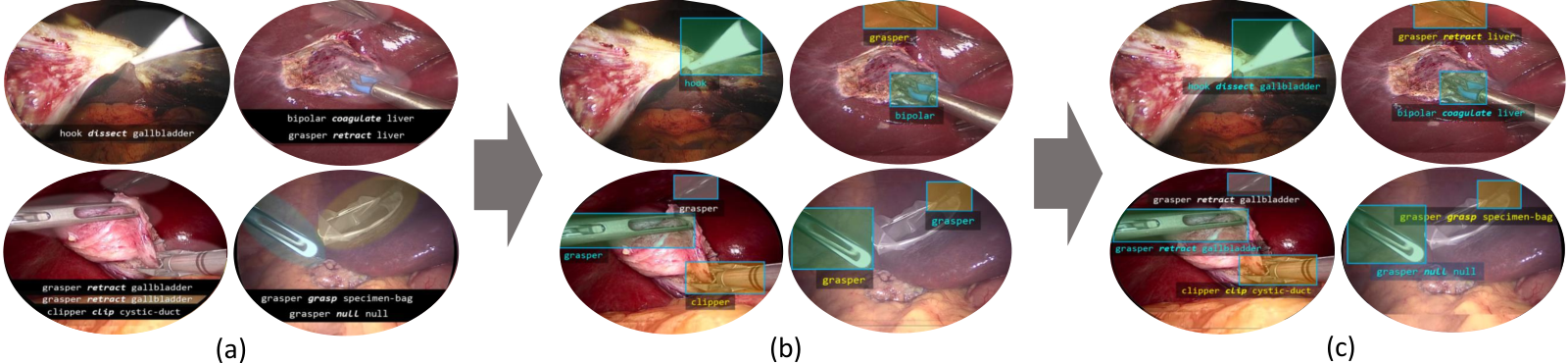
The challenge introduced the triplet detection task requiring:
- Instrument localization: Detecting and localizing surgical tools with bounding boxes
- Triplet association: Predicting the action verb and target anatomy for each detected instrument
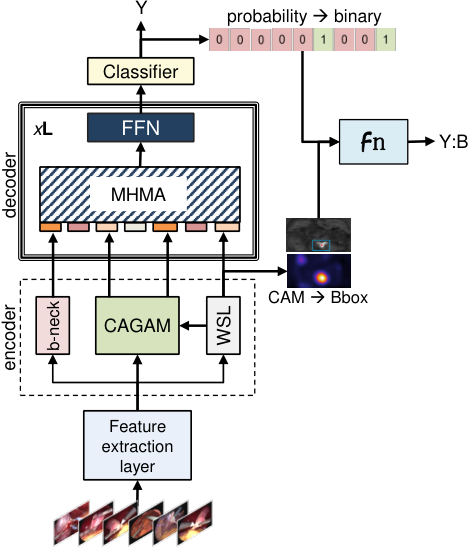
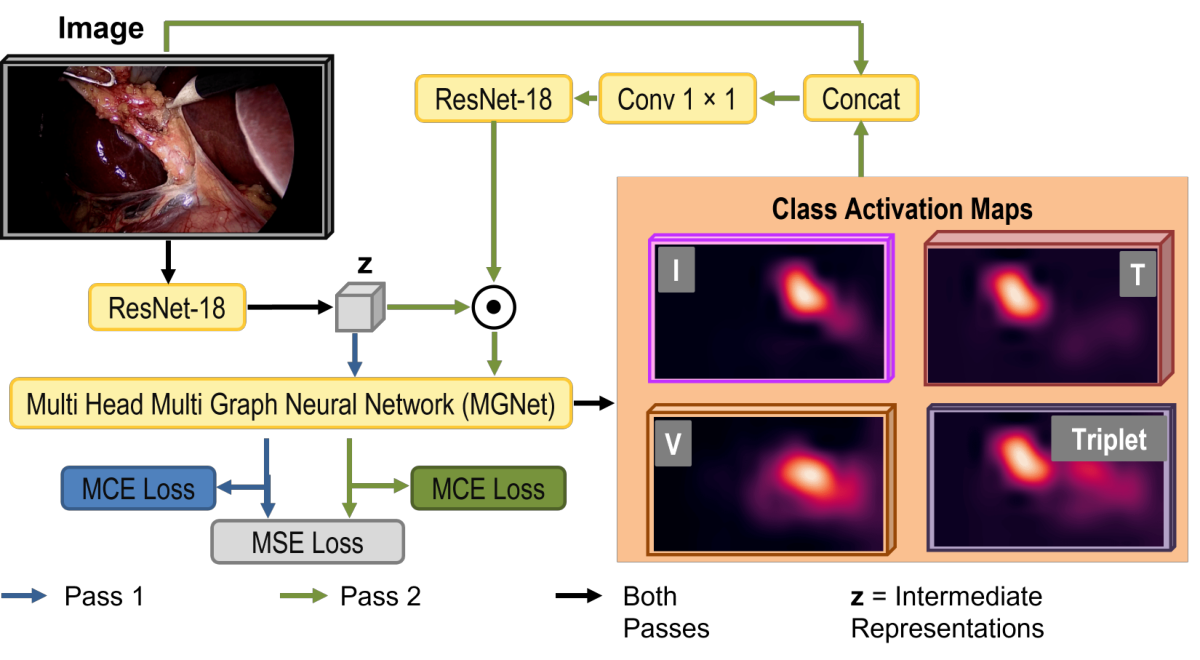
- Participating methods combined object detection architectures (DETR, Faster R-CNN) with triplet reasoning modules
Research Coverage
- Dataset: CholecT50 with bounding box annotations for instrument localization
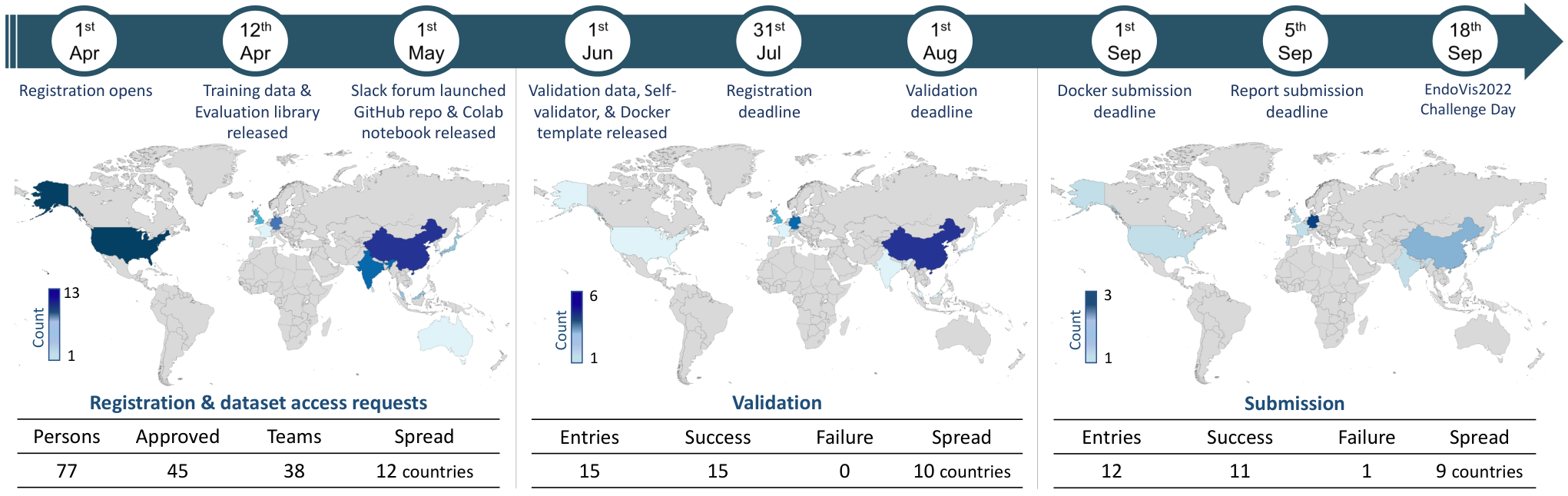
- Scope: 11 methods from international teams, evaluated on detection metrics
- Analysis: Joint evaluation of localization accuracy and triplet prediction, per-class detection analysis
- Domain: Surgical action triplet detection in cholecystectomy
Results and Findings
- Triplet detection is significantly harder than recognition, with best methods achieving 17.3% detection AP
- Instrument localization quality directly impacts triplet detection performance
- Two-stage methods (detect then classify) outperformed single-stage approaches
- Multi-scale feature extraction proved critical for detecting instruments of varying sizes