 Paper
 arXiv
 Code
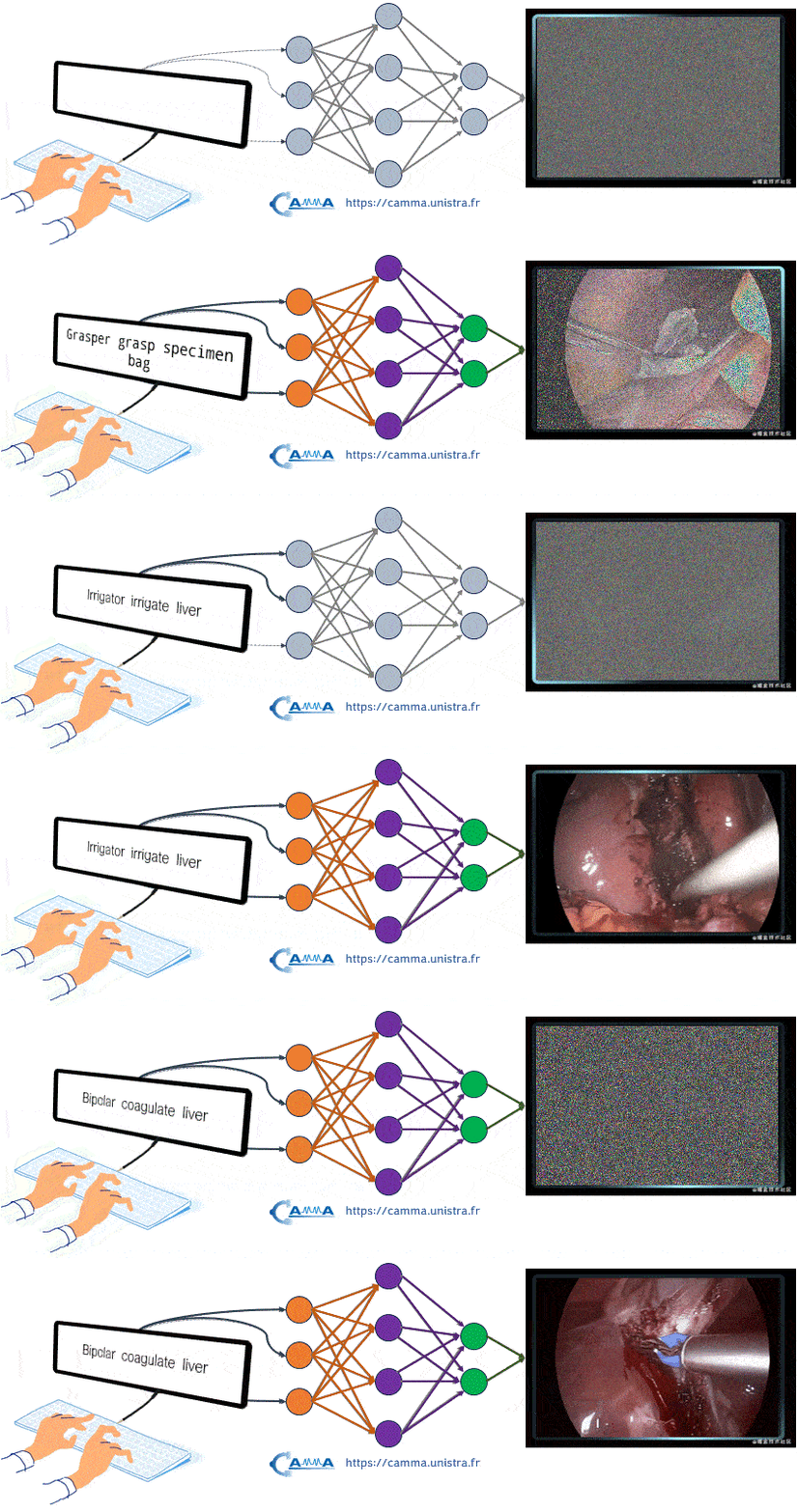
What is Surgical Imagen?
Surgical Imagen is a specialized generative model developed to address significant challenges in acquiring high-quality, annotated surgical data for research, training, and development in the medical field, particularly in the domain of laparoscopic surgery. Surgical Imagen is a diffusion-based text-to-image generative model designed to create photorealistic surgical images from textual descriptions, specifically using triplet-based textual prompts that include an instrument, an action, and a target (e.g., "clipper clip cystic duct"). This model builds upon the foundational principles of the Imagen framework, which integrates a large language model, a diffusion model, and a super-resolution component to generate high-fidelity images from text inputs.
- Text-to-Image Generation: Surgical Imagen generates realistic surgical images based on text descriptions, capturing the nuances and details required for surgical training and education.
- Triplet-Based Prompts: The model leverages triplet annotations (instrument, action, target) to succinctly describe surgical scenes. This format ensures that the generated images are contextually accurate and semantically meaningful.
- Diffusion Model: By employing a diffusion-based generative approach, Surgical Imagen produces high-quality images that closely resemble real surgical scenarios.
- Instrument-Based Class Balancing: To address the imbalance in surgical datasets, where some critical actions or instruments may be underrepresented, Surgical Imagen includes a technique to balance the classes based on instrument frequency in the dataset. This improves training convergence and the ability to generate diverse and representative images.
- Evaluation and Validation: The model's effectiveness is validated using human expert evaluations and automated metrics such as FID (Fréchet Inception Distance) and CLIP (Contrastive Language-Image Pre-Training) scores. These evaluations ensure that generated images are not only photorealistic but also align well with the input textual prompts. It also covers aspects such as quality, reasoning, knowledge and robustness.
Method
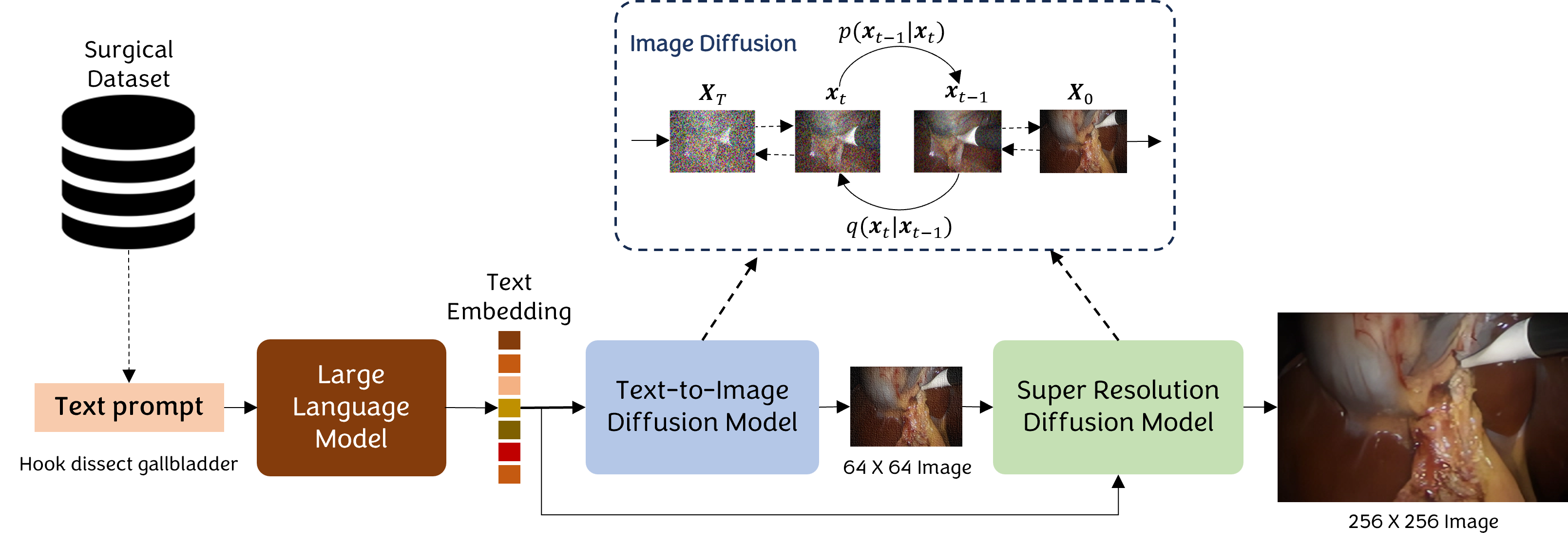
The Surgical Imagen framework builds on the Imagen architecture with surgical-specific adaptations:
- Triplet-based text conditioning: Structured prompts describing surgical scenes as <instrument, verb, target> triplets (e.g., "grasper retract gallbladder")
- Cascaded diffusion model: A base diffusion model generates low-resolution images, followed by super-resolution stages for high-fidelity output
- Instrument-based class balancing: Addresses dataset imbalance by balancing training samples based on instrument frequency
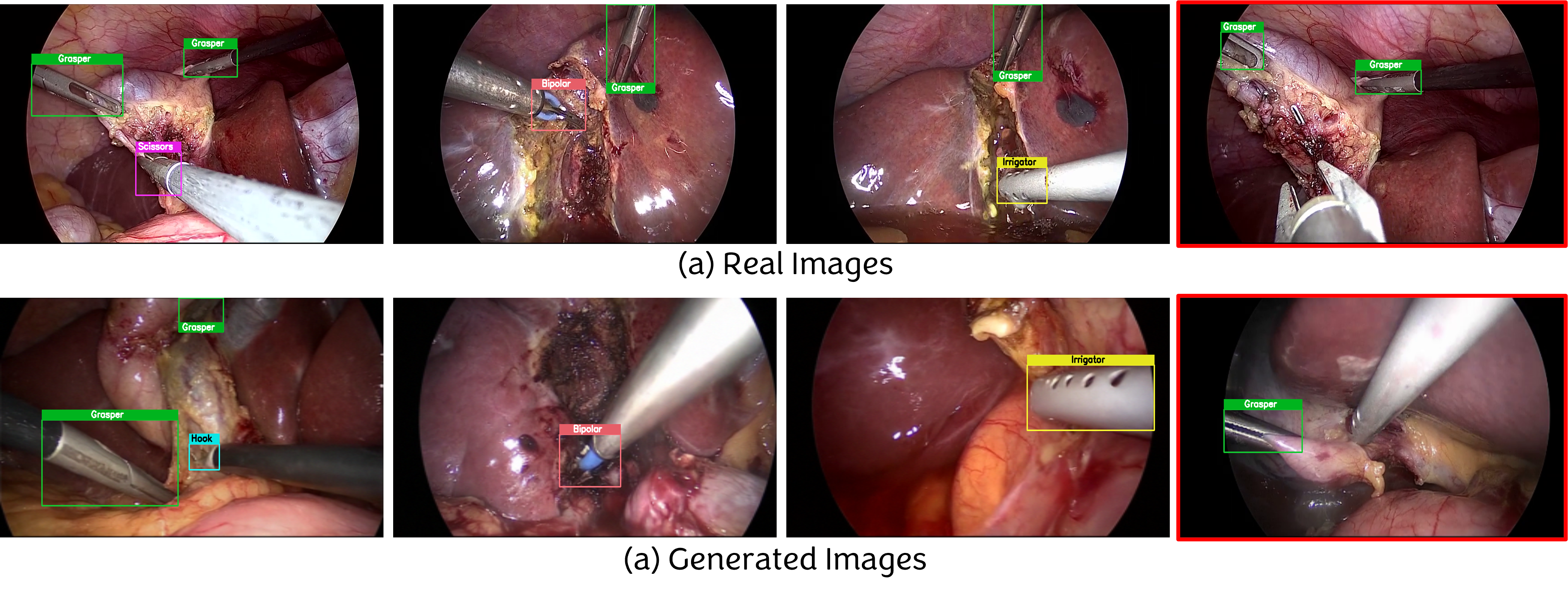
Example Generated Images










Example Generated Clinically Impossible Images




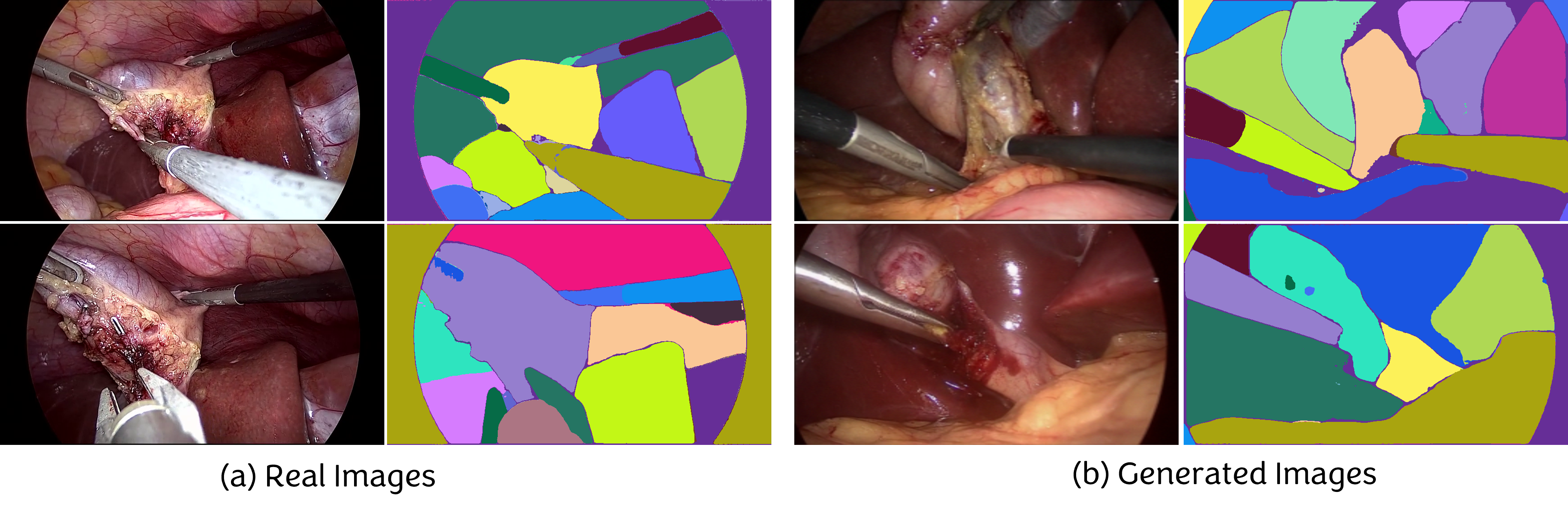
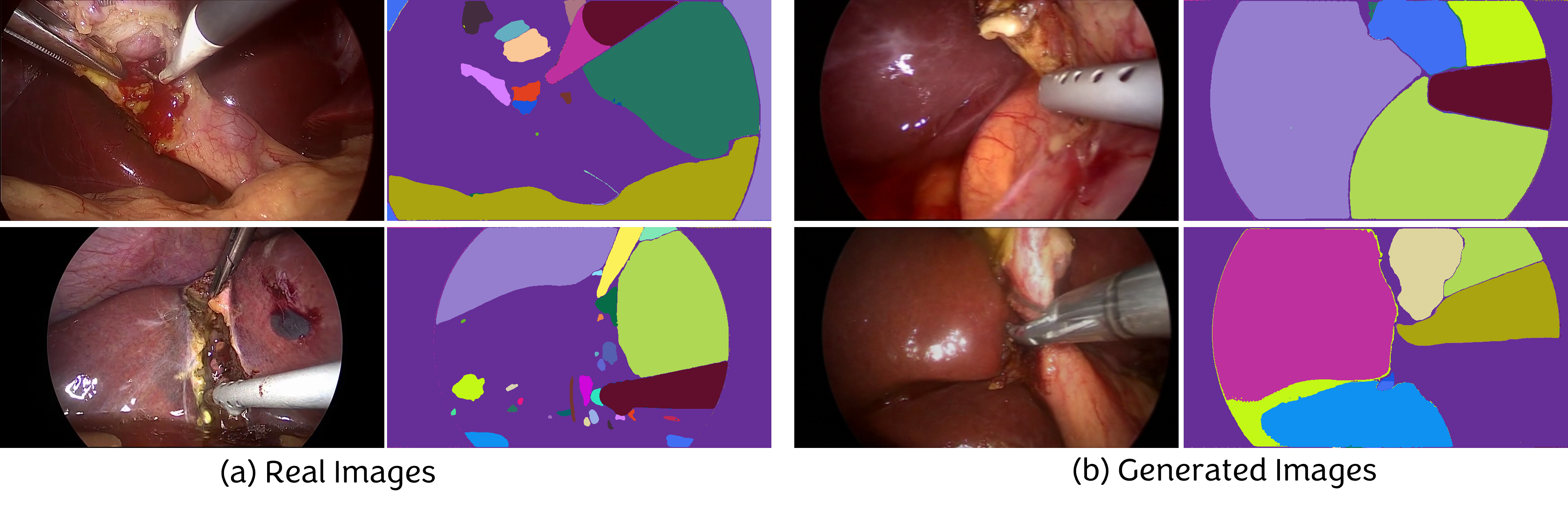
Example Deep Learning Inference on Generated Images
Survey
- Do you have medical knowledge?
- Do you know about laparoscopic cholecystectomy?
- Can you differentiate AI generated surgical images from the real one?
- Take the test @ https://t.ly/endogen !
- View your performance here afterward ...
- And not forgetting that your effort will be acknowledged.
Leaderboard
The authors acknowledge the following clinicians for their participation in filling the evaluation survey:
Not satisfied with your score? Can you beat the top score? Take the study again here! It is allowed...
Special Thanks
The authors acknowledge the following clinicians for their participation in filling the evaluation survey:
Acknowledgement
This work was supported by French state funds managed within the Plan Investissements d'Avenir by the ANR under references: National AI Chair AI4ORSafety [ANR-20-CHIA-0029-01], IHU Strasbourg [ANR-10-IAHU-02] and by BPI France [Project 5G-OR]. This work was granted access to the servers/HPC resources managed by CAMMA, IHU Strasbourg, Unistra Mesocentre, and GENCI-IDRIS [Grant 2021-AD011011638R3, 2021-AD011011638R4].